
Pakistan's military leadership has committed to securing the country's "rightful share" of water under the Indus Water Treaty, following India's actions post-Pahalgam attack. The military also expressed concerns over militant activities from Afghan territory and reaffirmed support for Kashmiris, vowing continued operations against terrorism.
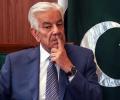
Pakistan's Defence Minister Khawaja Asif has issued a war threat against India, citing water security as a national concern. This comes as Pakistan grapples with a severe internal water crisis, attributed by experts to mismanagement, and India maintains its suspension of the Indus Waters Treaty following a terror attack. Asif accused India of "weaponising water" but admitted to lacking current data on the situation.
India's measures announced against Pakistan on April 23 will remain effective, the sources said.

Pakistan's Prime Minister Shehbaz Sharif used his UN General Assembly address to thank former US President Donald Trump for his "timely intervention" in the 2025 conflict with India, a claim India consistently denies. Sharif also raised the Kashmir issue and discussed the Indus Waters Treaty, while touting Pakistan's role in mediating US-Iran peace.

India strongly criticised Pakistan at the United Nations, labelling it a "Frankenstein state" for its alleged support of terrorism. The remarks came after Pakistan and the OIC raised the Kashmir issue, which India firmly rejected, reiterating Jammu and Kashmir's integral status. India also deemed the Indus Water Treaty "outdated" given Pakistan's policies.

Another official said that India is planning to enhance its current hydropower capacity of around 3000 megawatts on the rivers that were earlier being used by Pakistan and a feasibility study in this regard is planned, the official said

'Much can be done by India under the provisions of the treaty to make full use of its rights it has.' 'The impact of that will be felt downstream.'

Pakistan's former foreign minister Bilawal Bhutto-Zardari on Monday said his country will go to war if India denies Islamabad its fair share of water under the Indus Waters Treaty (IWT).

India has accused Pakistan of violating the spirit of the Indus Waters Treaty by engaging in acts of terrorism and refusing to modify the treaty. India's Permanent Representative to the UN, Ambassador Parvathaneni Harish, addressed the UN Security Council, highlighting Pakistan's disinformation regarding the treaty and its continued support for cross-border terrorism. He stated that India has always acted responsibly as an upper riparian state and that Pakistan's actions have jeopardized civilian lives, religious harmony, and economic prosperity. India has suspended the treaty until Pakistan ends its support for terrorism.
Pakistan has written to India seeking information about the Svalkot hydroelectric project on the River Chenab, according to the Foreign Office spokesperson.

During the meeting, Pakistan was expected to highlight concerns about the three Indian hydro projects being built on the rivers flowing to Pakistan.
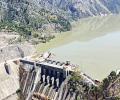
Pakistan has halted the construction of contentious canals in Punjab province after India suspended the Indus Waters Treaty following a deadly terrorist attack in Kashmir. The decision to suspend the canals project was made after Prime Minister Shehbaz Sharif met with PPP chairman Bilawal Bhutto-Zardari and agreed to address the concerns of Sindh province, where the project had sparked protests. The canals project, aimed at irrigating the desert region in Punjab, was seen as a threat to water resources in Sindh. Both sides have agreed to seek consensus on the issue in the Council of Common Interests (CCI), a high-powered inter-provincial body. Meanwhile, Pakistan has reiterated the importance of the Indus Water Treaty for its water security and economy, and condemned India's move to suspend it.
India has stopped releasing water from the Baglihar Dam on the Chenab River and is planning similar measures at the Kishanganga Dam on the Jhelum River, following a recent terror attack in Jammu and Kashmir. These hydroelectric dams offer India the ability to regulate water releases. This decision potentially affects the Indus Waters Treaty, a decades-old agreement between India and Pakistan governing the use of the Indus River and its tributaries. The Baglihar and Kishanganga dams have been points of contention between the two nations in the past.

A Pakistani senator has warned that India's approval of a hydel power project on the Chenab River will further inflame tensions between the two countries, particularly in light of the suspended Indus Waters Treaty.
Emergency legal and constitutional consultations were held in response to India's unilateral move, and preliminary groundwork has been completed after which it has been decided to formally serve a diplomatic notice to India over the suspension of the treaty

India has strongly criticised the local body elections in Pakistan-Occupied-Kashmir (PoK), labelling them as a facade to conceal Pakistan's illegal occupation and severe human rights violations in the region. External Affairs Ministry spokesperson Randhir Jaiswal reiterated India's stance that all of Jammu and Kashmir, and Ladakh, including PoK, are integral parts of India. He also dismissed Pakistan's claims to a shared cultural legacy, citing its history of promoting terrorism and fundamentalism.

Pakistan has voiced concerns over the alleged variations in the flow of the Chenab River and has written a letter to India seeking clarification. They also commented on an incident in Bihar involving the removal of a Muslim woman's veil.
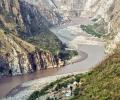
Pakistan may face a significant water shortage during the Kharif season due to reduced water supplies from India.

Vikas Swarup says India unlikely to give Pathankot-like offer to Pak in Uri attack probe.

He clarified that though China has not announced any such move, but even if it happens, it would in fact help mitigate the annual Assam floods.
It is the first major contact of its kind since the Pakistan-India conflict in May, the paper said, citing sources.
India rejects this so-called "supplemental award", the ministry of external affairs said, referring to the ruling in the case related to Pakistan's objections to Kishenganga and Ratle hydropower projects.

Shehbaz emphasised that water was a lifeline for Pakistan, and no compromise would be made on the country's rights under international agreements, as per Geo News.
China and Pakistan concluded their strategic dialogue, reiterating their opposition to unilateral actions in South Asia and discussing Kashmir, Afghanistan, and trilateral cooperation.

Pausing the process for now, the bank would hold off from appointing the Chairman for the Court of Arbitration or the neutral expert -- appointments that had been expected on December 12 as earlier communicated by the bank.

The announcements were made after a meeting chaired by Prime Minister Shehbaz Sharif to formulate the country's response to India's move to suspend the Indus Water Treaty and downgrade diplomatic ties after the Pahalgam terror attack.

'Militarily, it risks escalating tensions with Pakistan, potentially triggering conflict due to Pakistan's heavy reliance on the Indus.'

India's External Affairs Minister S Jaishankar, addressing the UN General Assembly, strongly criticised Pakistan for its support of terrorism, asserting India's right to self-defence and stating that friendship cannot coexist with terrorism. He also highlighted India's global responsibilities, contributions to the Global South, and its stance on reformed multilateralism and AI.
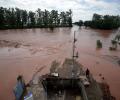
Pakistan has urged India to fully adhere to the Indus Water Treaty (IWT), expressing concerns about the level of detail in flood information shared through diplomatic channels.

Pakistan Prime Minister Nawaz Sharif has said that the Indus Water Treaty was a mutually agreed arrangement between his country and India brokered by the World Bank and no one country can unilaterally separate itself from the treaty.
'What Modisaab will accomplish by tampering with the treaty is providing ammunition to ultra-nationalist right wing elements within Pakistan who see India as an existential threat.'

Pakistan has reiterated its desire for normal neighbourly relations with India, while also criticizing India's decision to put the Indus Waters Treaty in abeyance. The Foreign Office spokesperson emphasized Pakistan's commitment to diplomacy and regional cooperation.

Pakistan has raised objections to the design of India's Kiru hydroelectric plant, a mega 624 MW project over the Chenab river in Jammu and Kashmir, but New Delhi asserts that the project is fully compliant with the Indus Water Treaty, according to officials.
'China has thus far been cautious, emphasising its focus on development rather than weaponising water resources.'

In a first since the signing of the Indus Water Treaty between the two countries, three female officers will also be part of the Indian delegation, which will be advising the Indian Commissioner on various issues during the meeting, the official said.

India on Monday extended the closure of its airspace for flights operated by Pakistan airlines by another month till July 24.

India has issued a strong warning to Pakistan against continuing its 'hateful' rhetoric and any potential misadventures, following recent nuclear threats and remarks from Pakistani leadership.

'This is what we train for: That one chance to deliver a blow so lethal that the enemy will constantly think about it when planning any misadventure.'
The meeting in Delhi will continue on Tuesday as well, according to the Pakistani high commission.
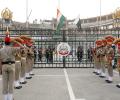
Pakistan's Foreign Office spokesperson Shafqat Ali Khan said on Friday that the ceasefire with India was holding and the country is committed to it. He also said that Pakistan is committed to making the ceasefire hold and de-escalation succeed, and then engagement to lead to stability and resolution of issues. Khan said that the two militaries have a channel of communication through the Directors General of Military Operations, through which they are working for de-escalation, in terms of the movement of troops. He added that Pakistan remains committed to the ceasefire announced on May 10 and lately, both sides have taken steps for de-escalation and return of stability.
